
dTIMS Operations Management
Smarter operations. Stronger performance.
Plan, manage, and complete maintenance work with confidence.
dTIMS Operations Management (OM) helps infrastructure agencies manage work orders, coordinate resources, track costs, and improve visibility across daily maintenance operations.
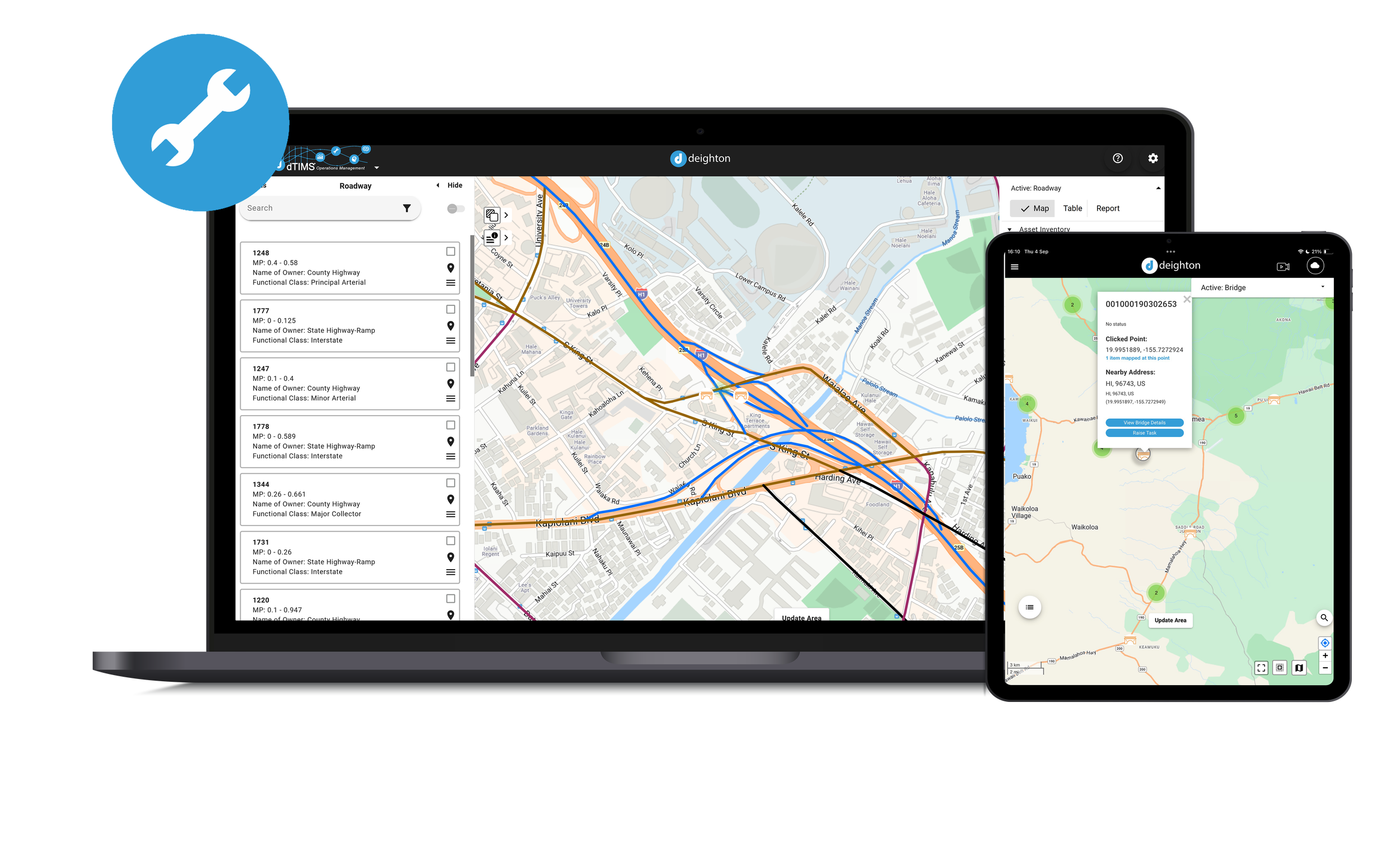
dTIMS OM helps infrastructure teams coordinate maintenance activities, manage work orders, track resources and costs, and connect field operations with broader asset management priorities in one operational environment.
Work smarter. Improve visibility. Strengthen operations.
Coordinate

Track
Improve
What is dTIMS OM?
dTIMS Operations Management (OM) is a maintenance management solution that helps infrastructure agencies organize, track, and improve day-to-day maintenance activities across their asset networks.
With dTIMS OM, teams can manage work orders, coordinate labour, equipment, and materials, monitor costs and progress, and connect operational work with broader asset management priorities.
Key Features of dTIMS OM
-
![A software image of dTIMS OM showing the management planning forms]()
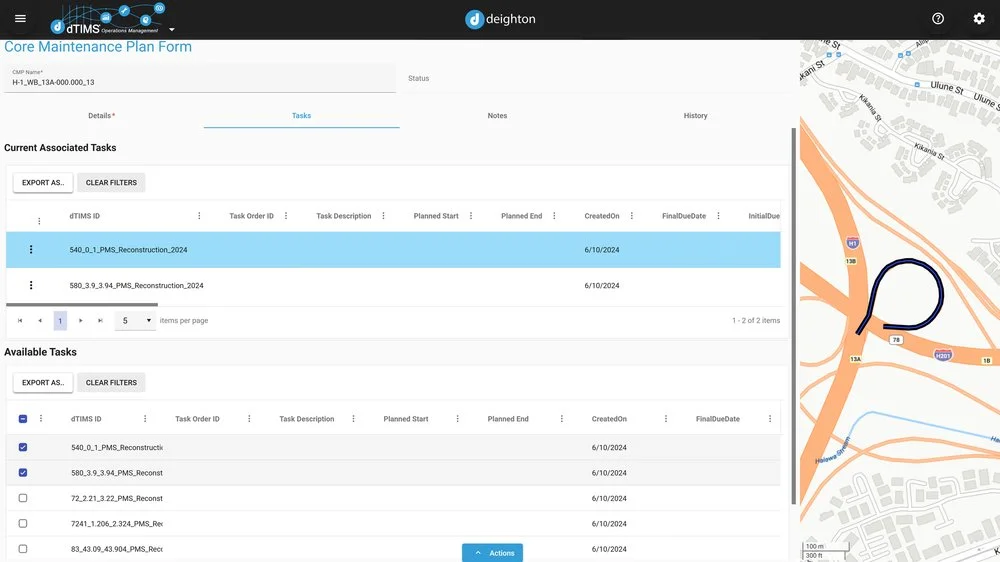
Proactive Maintenance Management
Develop strategic maintenance plans that reduce downtime and extend asset lifespans.
Seamless integration with dTIMS Business Analytics (BA) for optimized task execution.
-
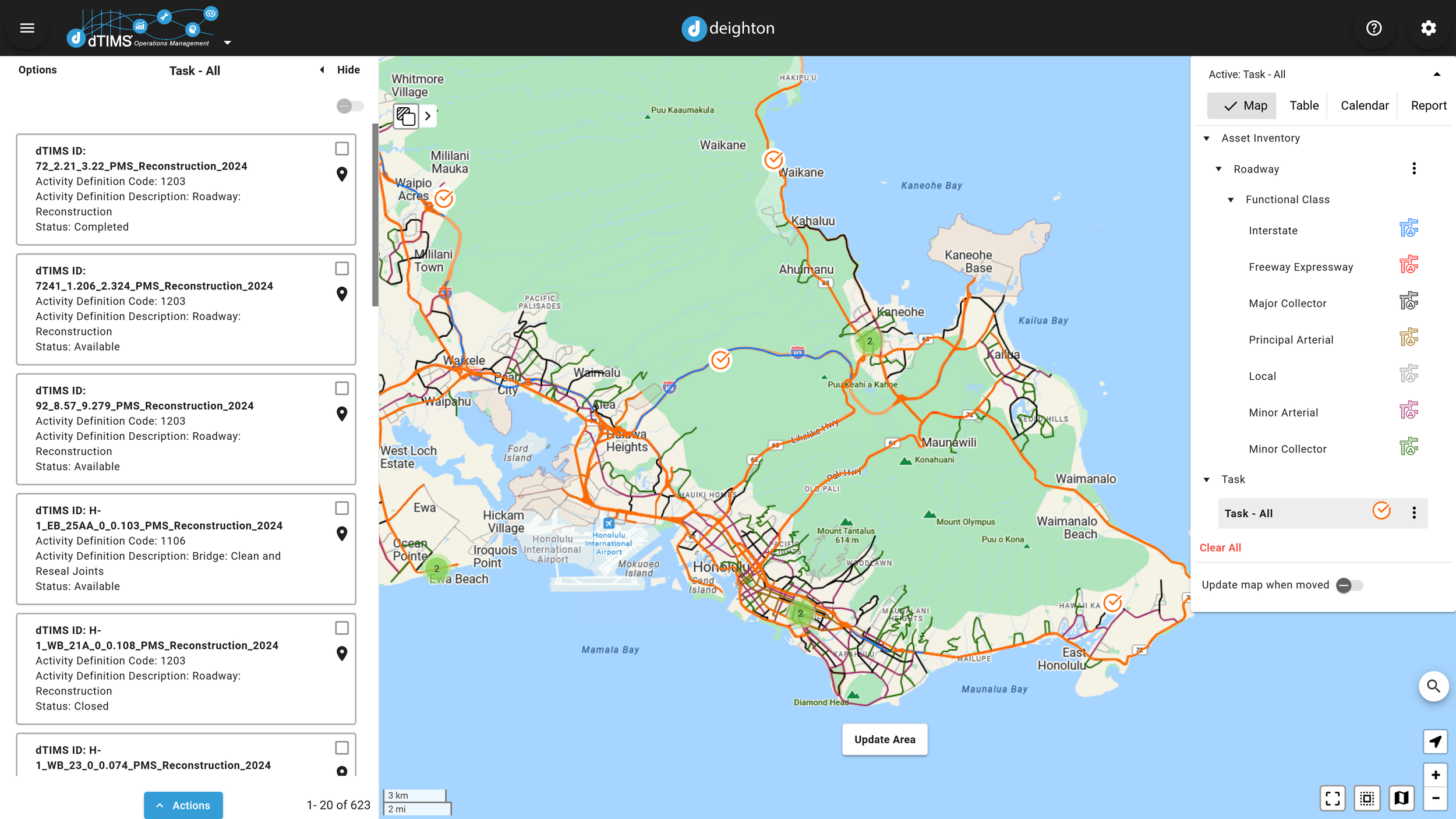
![A software image of dTIMS OM showing streamlined work order management]()
Streamlined Work Order Management
Automate scheduling, tracking, and execution of maintenance tasks.
Improve operational efficiency with structured activity definitions and workflows.
-
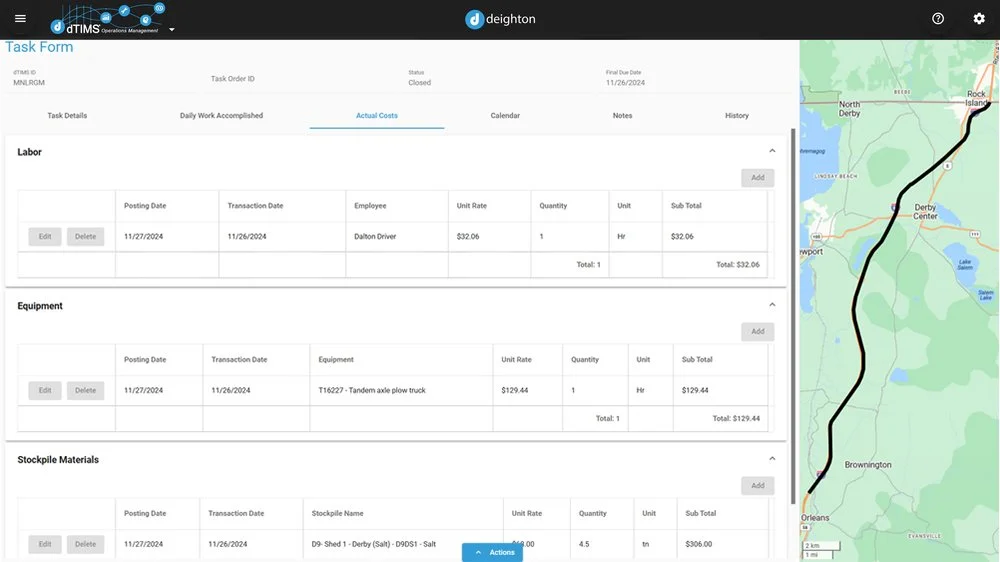
![A software image of dTIMS OM showing the task forms]()
Advanced Resource Tracking & Cost Control
Real-time monitoring of labor, equipment, and materials (LEM) usage.
Activity definitions can be used to estimate future work based on various configurations
-
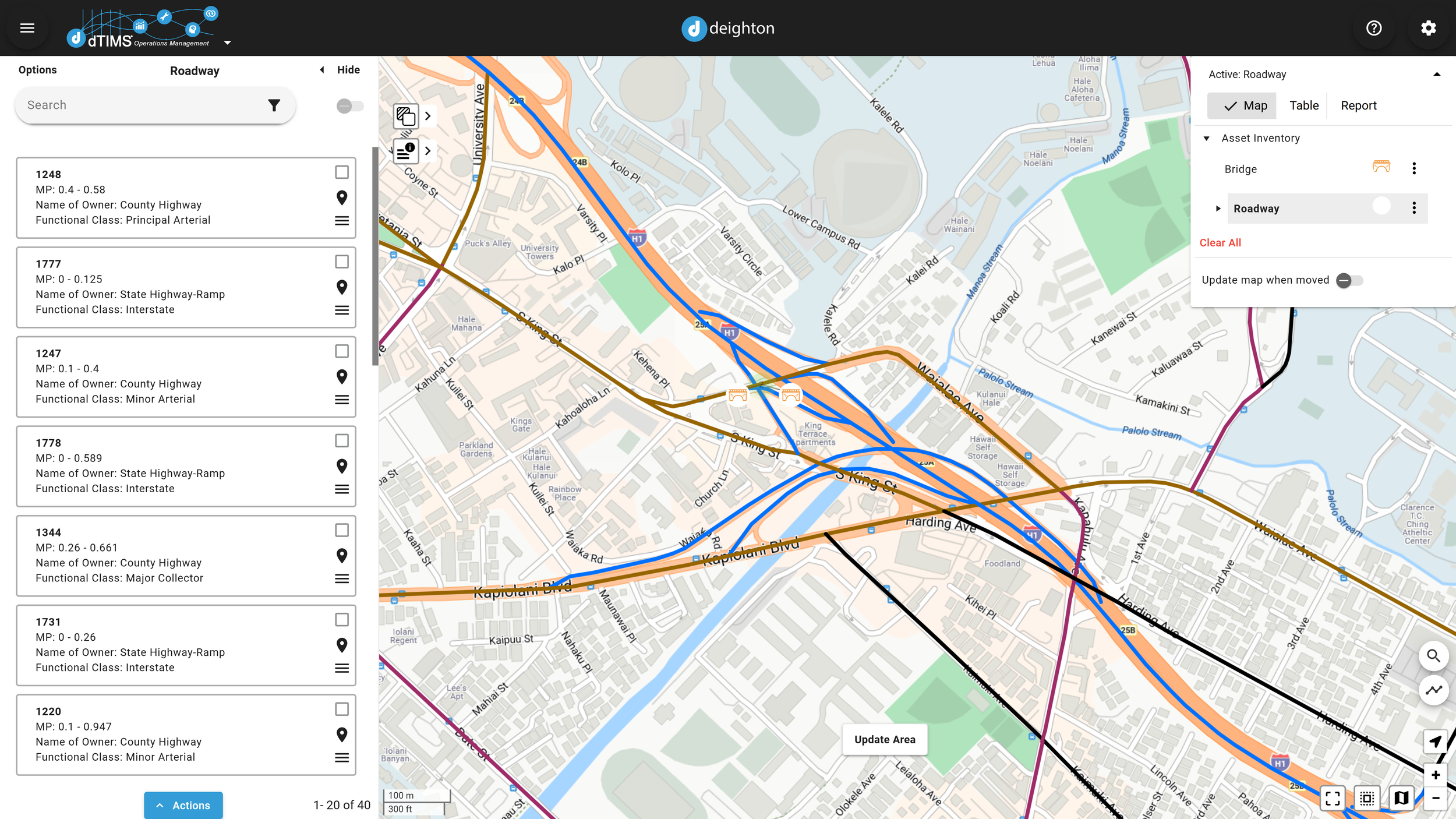
![A software image of dTIMS OM showing interactive mapping]()
Interactive Asset Mapping & Visualization
Locate and assess infrastructure assets with powerful GIS tools.
Layered visualization provides a holistic view of asset conditions.
-
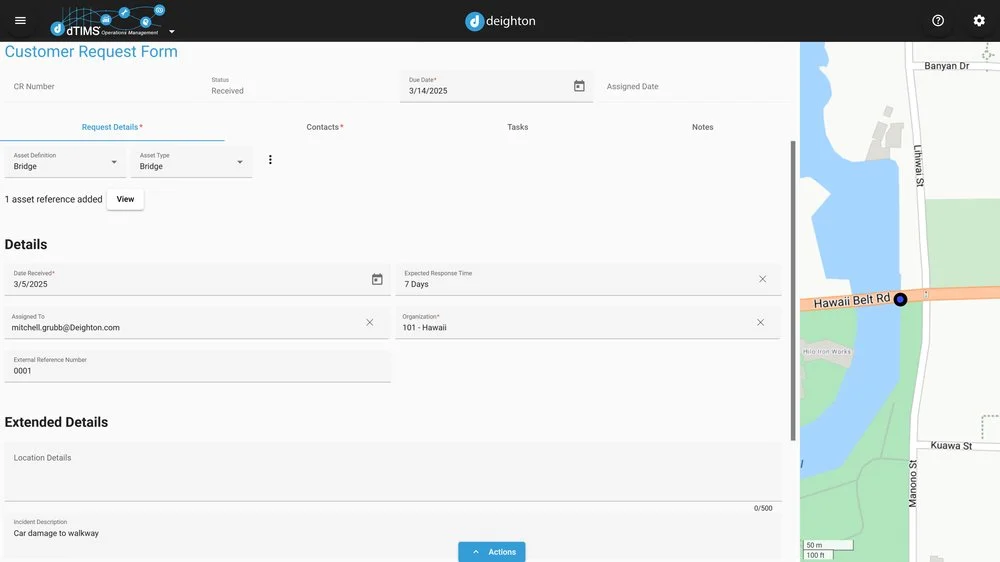
![A software image of dTIMS OM showing the request forms]()
Integrated Service Request Management
Capture, track, and resolve internal and external service requests efficiently.
Enhance response times and improve maintenance workflows.
-
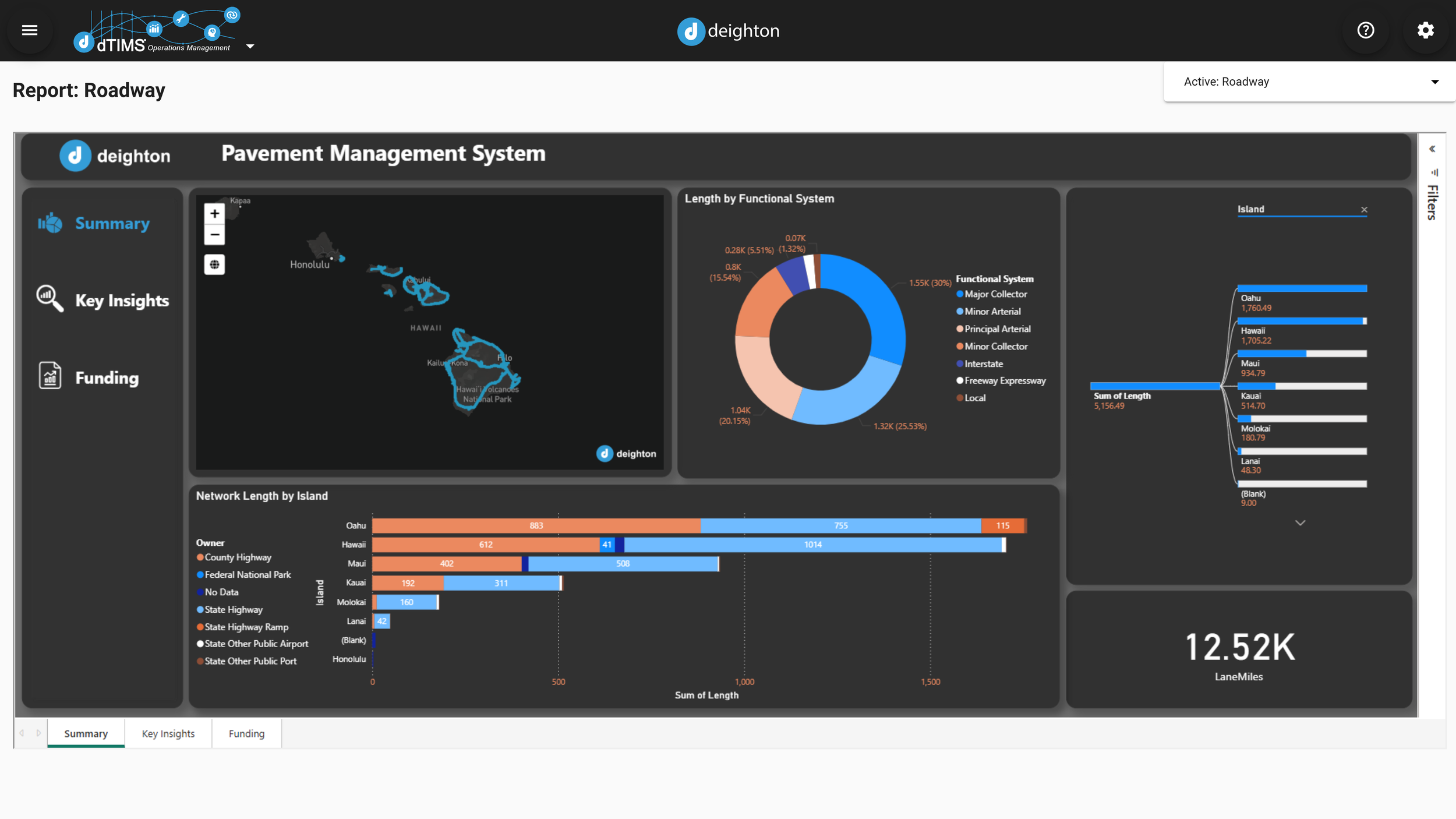
![A software image of dTIMS OM showing the reporting pages]()
Intelligent Reporting & Performance Analytics
Gain actionable insights with customizable reports and real-time dashboards.
Improve compliance and optimize decision-making with detailed audit trails.
Why Choose dTIMS OM?
Built for daily operations. Designed for long-term performance.
dTIMS OM gives infrastructure agencies a connected, cloud-based environment for organizing maintenance work, managing resources, controlling costs, and extending asset lifecycles
-
Transition from reactive to proactive maintenance with dTIMS OM’s structured approach. Core Maintenance Plans (CMPs) and Annual Work Plans (AWPs) help agencies prioritize maintenance tasks efficiently, ensuring optimal asset performance while reducing unplanned repairs.
-
Effectively manage labor, equipment, and material (LEM) resources with real-time tracking. Activity definition configuration allows for more accurate planning, as maintenance admins can set up their network activity definitions with default costs that will be inherited throughout child organizations, allowing for better estimates.
-
Gain full visibility of infrastructure assets with intuitive mapping tools, layered data visualization, and detailed asset insights. Paired with a dTIMS BA analysis, dTIMS OM ensures long-term asset sustainability through informed maintenance trends and projects.
-
Real-time performance tracking, robust reporting, and customizable dashboards give agencies the insights needed for informed decision-making. dTIMS OM enhances transparency, ensures compliance, and fosters accountability within maintenance operations.
-
In today’s fast-paced world, mobility is key to staying ahead. dTIMS OM is built to be fully functional on mobile devices, allowing field teams and managers to stay connected and efficient no matter where they are. With offline functionality, field teams can continue working even without an internet connection. Once back online, data syncs automatically, ensuring no work is lost.

A Connected Asset Management Ecosystem
How the dTIMS ecosystem works together
The dTIMS ecosystem connects field data, strategic planning, project development, and maintenance delivery so agencies can move from asset information to coordinated action within one connected environment.
-
Field teams use dTIMS Inspect and dTIMS Mobile to complete inspections, capture condition information, document defects, add photos and notes, and synchronize reliable asset data back to the organization.
-
dTIMS BA uses asset condition, performance, cost, and treatment data to forecast deterioration, compare funding scenarios, optimize investment strategies, and support defensible long-term decisions.
-
dTIMS Tactical carries strategic recommendations forward by allowing teams to review treatments, apply local knowledge, allocate budgets, bundle work into projects, and develop achievable multi-year programs.
-
dTIMS OM and dTIMS Mobile help teams schedule work, assign resources, manage work orders, record field progress, track costs, and keep operational activity connected between crews and office teams.
-
Completed work, updated costs, inspection findings, and field observations flow back into the ecosystem, strengthening the data used for future maintenance, tactical programming, and long-term investment planning.